

A Solo Female's Guide to Popular Scams in Every Country
Solo female travel is one of the most freeing things you can do for yourself. It's also, unfortunately, a magnet for a very specific kind of predator: the one who understands that a woman traveling alone is often polite, trusting, and reluctant to make a scene. That combination is exactly what con artists are trained to exploit.
This guide breaks down the single most common scam in every country on Earth, with a deliberate focus on the two cons that hurt solo women the most: romance scams (the slow-burn emotional and financial manipulation that can drain your bank account and your heart) and visa or green card fraud (the paperwork con that preys on women trying to relocate, work abroad, or build a life with someone they met overseas). Some destinations are genuine, well-documented global epicenters of this exact scam, Nigeria's "Yahoo Boys," the Dominican Republic's "sanky panky," Morocco's online romance networks, and Ghana's "Sakawa Boys" are among the most researched and reported romance-fraud operations in the world, and we've given those countries the depth they deserve. In countries where romance scams genuinely aren't the dominant, documented threat, we say so plainly and tell you what actually is, rather than forcing a pattern onto a place where it doesn't fit.
Knowledge is the opposite of fear. Once you know the shape of a scam, it loses its power over you.
How Romance Scams Actually Work
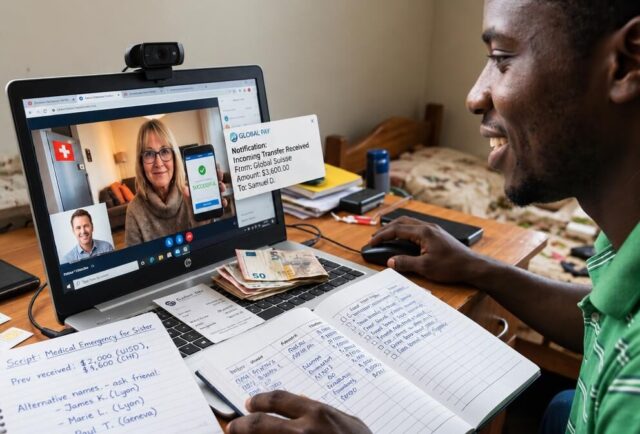
Before the country list, it helps to understand the pattern, because it repeats itself with local flavor everywhere from Lagos to Bangkok. A romance scam almost always follows the same arc: a fast, intense connection (often starting on a dating app, social media, or even in person at a bar or tourist site), a manufactured emergency that requires money, and a slow escalation designed to keep you invested until you've sent far more than you'd ever have agreed to upfront. The "engineer on an oil rig," the "businessman stuck at customs," and the "sudden hospital bill" are all the same trick wearing different clothes. If someone you've known for a short time, especially online, asks for money for any reason, that is the moment to stop, not the moment to prove your love.
Visa and green card scams work on a parallel emotional lever: the promise of a shortcut to residency, marriage-based immigration, or a work permit, sold by someone who claims special access or connections. Real immigration processes are slow, bureaucratic, and rarely improved by paying a stranger extra money to "expedite" them.
With that context, here is the country-by-country breakdown.
North & Central America
Antigua and Barbuda: Not a notable romance-scam market. The signature con here is jet ski damage extortion, where rental owners claim you caused scratches that were already there and pressure you into an on-the-spot cash payment.
Bahamas: Watch for unlicensed straw market "guides" who tack themselves onto your shopping trip uninvited, then demand a steep fee for a walk that took two minutes.
Barbados: A beach vendor places a bracelet, shell, or "good luck charm" in your hand without asking, then insists you owe "island support" money for it. Politely decline before anything touches your hand.
Belize: The classic bait is a free tequila or rum sample invite that funnels you into a locked room and a high-pressure timeshare or product pitch.
Canada: This one is a visa scam worth knowing before you even book your flight. Unofficial third-party websites charge $100 or more for an eTA that costs about $7 directly through the Canadian government's official site.
Costa Rica: The "flat tire" scam involves someone slashing your rental tire at a stoplight, then "helpfully" appearing to fix it while an accomplice robs the vehicle.
Cuba: Cuba has a documented history of "jineteros," local men who cultivate romantic relationships with foreign women specifically for gifts, cash, meals, and help affording day-to-day life in a country with a struggling economy, sometimes extending to marriage as a path off the island. Separately, touts claim a "cigar festival" ends today only, pressuring you into rushed, overpriced purchases of counterfeit cigars.
Dominica: A guide walks you to a public, freely accessible waterfall and then demands a "permit fee" as if the land were private.
Dominican Republic: This is one of the most heavily documented romance scams in the Caribbean, locally known as "sanky panky." Charming local men, often working in resorts, on beaches, or in tourist bars, target single foreign women with intense attention, dancing, and affection, building what feels like a real relationship over the course of a stay. Once trust is established, the requests begin: money for a sick relative, help starting a business, funds to visit you back home, or eventually a push toward marriage as a path to a visa. Researchers who have studied the pattern note that many of these men run the same script with several tourists at once, and the "relationship" typically ends the moment the money stops. Rental agencies holding your passport over invented vehicle damage is also common here, so photograph any rental car thoroughly before you drive off.
El Salvador: Unlicensed taxis have been used for express kidnappings, driving passengers to an ATM and forcing a withdrawal. Always book vetted transport in advance.
Grenada: Hidden "tourist taxes" get added at spice markets after you've already agreed to a price for hand-ground spices.
Guatemala: On chicken buses, "helpers" load your bag onto the roof, and it conveniently falls off en route, vanishing along with whoever was supposed to be watching it.
Haiti: Scammers posing as NGO staff ask travelers for "entry donations" to fund local aid work that doesn't exist.
Honduras: Some diving operators sell PADI certification courses that were never actually registered with PADI, leaving you with a worthless certificate.
Jamaica: This is one of the Caribbean's most documented romance-scam hotspots. Locals build fast, flattering relationships with solo female tourists, then introduce a recurring string of "emergencies," medical bills, family debts, and business losses, that always require a wire transfer. The relationship often continues by phone long after you've left the island.
Mexico: ATM skimming at non-bank machines is rampant, especially around Tulum and Playa del Carmen. Use ATMs physically inside bank branches whenever possible.
Nicaragua: Fake real estate "agents" sell land to foreign buyers that they don't actually own or have the right to sell.
Panama: This is a visa scam specifically aimed at retirees and digital nomads. Lawyers advertising "Pensionado" residency services take thousands of dollars in fees and never file the actual paperwork.
Saint Kitts and Nevis: Handlers place a monkey on your shoulder for a "free" photo, then demand up to $50 once the picture is taken.
Saint Lucia: Taxi drivers claim their meter is broken to justify triple the normal fare. Agree on a price before the car moves.
Saint Vincent and the Grenadines: Inter-island boat taxis frequently overcharge tourists who don't know the standard local rate.
Trinidad and Tobago: Fake drivers hold up signs at the airport for tours or transfers that were never booked, collecting payment for a service that doesn't exist.
USA: The "Hi Grandma" scam targets families of travelers, with a caller impersonating a relative in a fake emergency and asking for urgent wired money, often timed to when a loved one is known to be abroad and hard to reach.
South America
Argentina: The "mustard stain" distraction theft has someone spill a condiment on you, then "help" clean it up while an accomplice robs you.
Bolivia: Men in fake police uniforms demand to see your passport and wallet, then simply keep them. Real police in Bolivia rarely stop tourists on the street for document checks.
Brazil: Motochorros, motorcycle duos, grab phones directly out of pedestrians' hands while riding past. Keep your phone in a zipped bag, not in your hand, on the street.
Chile: In Valparaiso, a staged flat tire distracts you while you check the wheel, and an accomplice goes through your bag.
Colombia: This is a genuine, serious romance-and-safety risk for solo women. Dating-app matches have used scopolamine, a drug that can erase your will and memory, to incapacitate and rob (or worse) travelers on in-person dates. Always meet first dates in busy public places and never accept an open drink you didn't watch being poured.
Ecuador: Vendors execute a fast counterfeit bill swap, taking your real note and returning a fake one while distracting you with conversation.
Guyana: A romance-scam variant here pushes "gold mining investment," with a new online partner asking for capital to fund a venture that doesn't exist.
Paraguay: At land borders, unofficial "officers" demand cash "entry stamps" that aren't a real government fee.
Peru: Around Cusco, operators charge steep prices for fake ayahuasca ceremonies run by people with no genuine training in the practice.
Suriname: Street currency changers hand out out-of-circulation bills that look plausible but are worthless.
Uruguay: Fake Airbnb-style listings for Punta del Este take deposits for rentals that simply don't exist.
Venezuela: Currency exchange scams here involve extremely practiced sleight-of-hand during black market swaps. Only exchange money through verified, secure channels.
Europe
Albania: Taxi drivers skip the meter entirely and quote a fixed high rate for short airport transfers.
Andorra: Duty-free shops sell high-end electronic clones marketed as name-brand originals.
Austria: Costumed touts near the opera houses sell overpriced tickets to low-quality "Mozart concerts" aimed squarely at tourists.
Belarus: Travelers are pressured into buying "mandatory" travel insurance at roughly ten times its actual value.
Belgium: A driver claims you clipped their mirror or bumper and demands cash on the spot to avoid "involving police."
Bosnia and Herzegovina: Locals charge a fee to guide tourists through supposedly active landmine-affected areas, playing on real historical fear.
Bulgaria: Women invite solo male tourists into a bar for a drink, and the bill arrives at around 1,000 euros for a single round.
Croatia: Private boat skippers tack on "fuel surcharges" of $200 or more at the very end of the trip, after you're already stuck out at sea.
Cyprus: A "free lunch" invite is actually the opening move of a high-pressure timeshare sales presentation.
Czech Republic: Currency exchange counters hand back "souvenir" bills of essentially zero value as part of your change.
Denmark: Ghost apartment listings specifically target remote workers and digital nomads searching for longer-term rentals.
Estonia: In Tallinn's Old Town, some clubs quietly pad the final bill well beyond what was ordered or agreed.
Finland: Fake husky safari websites take full deposits for tours that were never actually booked or operated.
France: A stranger "finds" a gold ring on the ground near you and insists you take it, then demands payment for it.
Georgia: A tavern host invites you in for wine as a gesture of hospitality, then leaves you holding an inflated bill.
Germany: Someone asks you to sign a petition for a cause like deaf children's charities while an accomplice picks your pocket.
Greece: A local invites you for "just one drink," then vanishes, leaving you with a bill far beyond a normal round.
Hungary: In Budapest, the printed menu you ordered from doesn't match the prices that show up on your final bill.
Iceland: Rental car companies charge as much as $3,000 for "hidden" sand or ash damage that's difficult to dispute after the fact.
Ireland: Scammers in high-visibility vests collect "donations" for charities that don't exist.
Italy: Near the Duomo or Colosseum, someone ties a "friendship bracelet" onto your wrist uninvited, then demands payment for it.
Kazakhstan: Officials, real or fake, ask for a bribe over supposedly missing registration paperwork.
Latvia: A dating app match takes you to a specific bar that charges around 500 euros per drink, splitting the profit with the venue.
Liechtenstein: Fake "all-access" museum passes are sold out of parking lots at inflated prices.
Lithuania: Unofficial Facebook rental groups collect deposits for accommodation that was never actually available.
Luxembourg: A "stranded driver" at a gas station asks for fuel money for what looks like a luxury car, a small-scale confidence trick repeated across many countries.
Malta: This is a visa scam worth flagging directly. Fraudulent "English schools" charge international students for study visas that are never actually filed or issued.
Moldova: At the Transnistria border, guards demand invented "medical fees" to let you cross.
Monaco: Well-dressed scammers posing as hotel valets take your car keys outside high-end hotels and simply drive off.
Montenegro: Locals charge an "entry fee" for beaches that are legally public and free.
Netherlands: Fake "police" on bicycles ask to check your credit card for supposed fraud, then walk off with it.
North Macedonia: Taxi drivers hand back old, discontinued Yugoslav-era coins as change.
Norway: Unofficial guides charge for "mandatory" escorts on the Trolltunga trail, which is actually a free public hike.
Poland: Women invite solo male travelers into a bar, and drinks are spiked to facilitate robbery once the target is disoriented.
Portugal: In Lisbon, street sellers push "hashish" that's actually pressed herbs or dirt with no real drug content.
Romania: At train stations, rapid, confusing change-counting routines leave you shorted by 50 lei or more.
Russia: Someone "finds" a wallet in front of you, and when you get involved to help, an accomplice accuses you of theft to extort a payoff.
San Marino: Tourists are charged for "authentic" passport stamps that carry no official value.
Serbia: Some taxi meters are rigged to run roughly five times faster than the legally set rate.
Slovakia: A "free" city map turns out to cost 10 euros once you've already unfolded it in front of the seller.
Slovenia: At Lake Bled, parking touts wave you into "private" lots charging 20 euros an hour.
Spain: A stranger presses rosemary or another herb into your hand and demands an "offering" in return.
Sweden: Street scammers carry fake contactless card readers disguised as charity donation stations.
Switzerland: High-end Swiss watch clones are sold in polished, temporary pop-up shops designed to look fully legitimate.
Ukraine: This is a documented reverse-romance-scam market: agencies hire local women to go on paid "dates" with foreign men specifically to drain their spending over the course of a visit.
United Kingdom: The classic three-card monte, or shell game, still runs on London's bridges and tourist streets.
Vatican City: "Skip the line" guides sell what are actually standard tickets at a steep markup.
Asia
Afghanistan: Unofficial checkpoints demand a "security fee" that has no legal basis.
Armenia: Mount Ararat tours get quietly rerouted through commission-heavy carpet shops.
Azerbaijan: A romance-scam variant here involves men posing as oil rig "engineers" who ask new online partners for visa fees just to meet in person, a meeting that never happens.
Bahrain: This is a visa scam. Fraudulent sponsors offer long-term residency arrangements that collapse once the fees are paid.
Bangladesh: Rickshaw drivers detour passengers to family-owned silk shops that pay them a commission.
Bhutan: Illegal guides offer discounted "daily fees" that skip the official tourism system entirely, risking deportation for the traveler.
Brunei: Customs officials issue steep fines for supposedly "prohibited" items that are often perfectly legal.
Cambodia: Border crossings see e-visas priced at $50 when the official government fee is closer to $30.
China: The "tea ceremony" scam has friendly "students" invite tourists for tea, then leave them with a bill of $500 or more.
East Timor: 4x4 rental agencies run a "vehicle recovery" scam, charging extra fees to retrieve a vehicle they claim broke down.
India: A stranger steps in something on your shoe (sometimes deliberately placed), then insists on cleaning it for a wildly inflated fee. Beware of romance scammers here as well.
Indonesia: In Bali, money changers use rapid sleight-of-hand while counting out your exchanged currency, shorting you in the process.
Iran: Vendors dye ordinary corn silk to sell as expensive saffron.
Iraq: Sellers offer "ancient artifacts" that are frequently both fake and, if real, illegal to export.
Israel: Vendors near religious sites sell "certified" holy land stones that are simply gravel.
Japan: In Roppongi, touts invite tourists into "free drink" bars that carry massive hidden cover charges once the bill arrives.
Jordan: Near Petra, charismatic local men styled after "Jack Sparrow" build fast romantic connections with solo female tourists as a lead-in to requests for money.
Kuwait: This is a visa scam targeting domestic workers, with agents charging fees to "legalize" a worker's status that never actually get processed.
Kyrgyzstan: Fake police shake down foreigners over supposedly missing identification.
Laos: Motorbike rental shops use a spare key to "steal back" the bike, then bill the renter for a theft they staged themselves.
Lebanon: Taxi fares get quoted in USD instead of Lebanese pounds using outdated exchange rates, inflating the bill roughly tenfold.
Malaysia: Someone drops fake bird droppings on you, then "cleans" you up while an accomplice picks your pocket.
Maldives: Private boats posing as official hotel shuttles overcharge for island transfers that should be included in your stay.
Mongolia: Fake VIP tickets are sold for the Naadam festival that don't grant any real access.
Myanmar: Sellers offer "rubies" that are actually colored glass.
Nepal: Some trekking guides exaggerate or fake symptoms of altitude sickness to trigger costly helicopter evacuations and collect insurance kickbacks.
North Korea: State guides levy on-the-spot "fines" for photos they later decide were illegal to take.
Oman: In the old souq, a "helpful" local offers to guide you out after "getting you lost," then charges a large fee.
Pakistan: This is a serious romance-and-immigration scam worth taking seriously. Rapid, intense courtships are used to secure marriage and a Western green card or visa, with the relationship often cooling dramatically once residency is secured.
Palestine: Political tour guides sometimes demand a "security donation" partway through a tour that wasn't part of the original agreement.
Philippines: Corrupt airport staff have planted bullets in luggage (laglag-bala) to extort bribes from travelers desperate to avoid a firearms charge.
Qatar: Ghost luxury apartment listings target major events, taking deposits for units that don't exist. Also, businessmen who look quite affluent and successful may approach women at expat or Internations meetups or online and begin to charm her with compliments and declarations of love, then suddenly have an "emergency".
Saudi Arabia: Unauthorized agents take deposits for Hajj or Umrah visas they have no authority to issue.
Singapore: Fake landlords on Gumtree or Facebook Marketplace collect rental deposits and disappear.
South Korea: In Seoul, groups linked to the Shincheonji movement recruit through friendly "culture study" invitations that lead into high-pressure religious recruitment.
Sri Lanka: Tuk-tuk drivers detour to commission-paying spice gardens that charge tourists inflated prices.
Syria: At checkpoints, officials demand a "recovery fee" for documents they claim are lost.
Tajikistan: Unofficial "agents" overcharge for Pamir Highway travel permits that are actually far cheaper through official channels.
Thailand: The classic combination is being told a palace or temple is "closed today," which redirects you toward a tuk-tuk driver and a commission-paying gem shop.
Turkmenistan: Transit visa processing is sometimes "expedited" only after an unofficial bribe.
UAE: A "wealthy" family approaches you in a mall claiming a sudden need for cash for petrol, a small-scale confidence trick rather than a real emergency.
Uzbekistan: Hotel staff claim they "forgot" to register your stay, then fine you for the oversight.
Vietnam: Motorbike rental shops charge for scratches and damage that were already present before you rented the bike. Photograph the vehicle thoroughly before you ride off.
Yemen: Travel between provinces sometimes requires an informal "tribal protection" fee.
Africa
Algeria: Desert guides have been known to abandon travelers mid-trip until additional money is wired.
Angola: This is a visa scam. Fraudulent agents charge around $500 for fake visa invitation letters.
Benin: High-pressure "voodoo ceremony" pitches push tourists to pay for expensive "sacrificial" materials.
Botswana: Ghost safari booking sites take full payment for lodges that don't actually exist.
Burkina Faso: A "market guide" falsely claims you disrespected a vendor, then uses that accusation to extort a payment.
Burundi: "Official" border taxis charge as much as $50 for a one-mile ride.
Cabo Verde: Fraudulent real estate schemes sell investment in "eco-resorts" that never break ground.
Cameroon: Phishing emails impersonate local authorities, threatening a fake customs fine to pressure quick payment.
Central African Republic: Roadblocks demand a bribe framed as a "safety passage" fee.
Chad: Police fine tourists for taking supposedly "illegal" landscape photographs.
Comoros: Vendors sell already-used ferry tickets for inter-island travel.
Congo (Brazzaville): At the airport, men grab your bag uninvited and demand roughly $20 to give it back.
DRC: Land border crossings extract bribes disguised as "Ebola" or general health certificate fees.
Djibouti: Vendors overprice khat, a mild herbal stimulant, specifically for tourists.
Egypt: Beyond the classic camel hostage move (agree on a price to mount the camel, then face a much higher price to get back down), Egypt's tourist towns like Luxor, Aswan, and Sharm El Sheikh have a long-running reputation for local men, sometimes called "horsemen" or felucca guides, cultivating fast romances with solo foreign women, which often lead to requests for money, gifts, or help securing a visa once the woman returns home.
Equatorial Guinea: A romance scam here features men posing as American oil workers on rigs, building online relationships before asking for money.
Eritrea: SIM cards are sold with a registration fee for mobile data that never actually functions.
Eswatini: Royal village tour guides charge fees roughly ten times the standard local rate.
Ethiopia: A traditional coffee ceremony invitation turns into a demand for a "support fee" once you're seated and served.
Gabon: Guides bring tourists into national parks without paying the official state entry fee, then keep the money for themselves.
Gambia: Known locally as "bumsters," young men build romantic relationships with older female tourists specifically to pursue money, gifts, or a path to a Western visa.
Ghana: This is a well-documented romance-and-gold scam. "Businessmen" met online cultivate a relationship, then ask for help covering fees to export gold, a shipment that never existed.
Guinea: Military checkpoints demand bribes to permit "late night" travel.
Guinea-Bissau: Unofficial officers charge for "visa on arrival" stamps that carry no real legal weight.
Ivory Coast: Scammers target travelers using public Wi-Fi with fake tech support pop-ups and calls.
Kenya: Coastal towns like Malindi and Mombasa have a well-studied pattern of "beach boys" who romance older foreign women, offering attention, flattery, and companionship that many visitors describe as feeling more genuine and appreciative than what they experience back home. That warmth is often the opening move of a long financial relationship: gifts, school fees, rent, and "emergencies" that recur for as long as the money keeps coming. U.S. prosecutors have also charged Kenyan nationals directly with running online romance scam rings targeting Americans, so the same pattern shows up digitally too.
Lesotho: Sellers claim ordinary blankets or crafts are "royal" quality to justify inflated prices.
Liberia: A romance scam here has a "charity founder" build an online relationship, then ask for money to fund a school project that doesn't exist.
Libya: Travel agencies in Tunisia sometimes guarantee Libyan visas they have no actual ability to secure.
Madagascar: A guide claims a lemur park is closed, then redirects you to his own unofficial "private" version of it.
Malawi: On Lake Malawi boat trips, crew members steal from unattended bags while guests are snorkeling.
Mali: Sellers offer fake "Timbuktu" manuscripts marketed as centuries old.
Mauritania: On the iron ore train, a "guide" demands a mid-ride security fee that was never agreed to beforehand.
Mauritius: Dolphin swim tours sometimes take payment upfront, then bring guests to areas with no dolphins at all.
Morocco: This is a real and increasingly documented romance scam, not just a street hustle. A charming local man, often working as a tour guide, in a riad, or in a café in cities like Marrakech or Fez, strikes up what feels like a genuine connection with a solo female traveler, sometimes in person and sometimes purely online before she ever books a flight. The relationship deepens over weeks or months, and then a financial request appears: a sick family member, a business opportunity, a visa fee, or money for a flight so he can finally come visit you. The amounts climb from there, and by the time the pattern is obvious, real money is already gone. Some of these operations never even require the victim to set foot in Morocco.
Mozambique: Police issue fines for not carrying your original passport; carrying a certified copy and keeping the original secured is the safer approach.
Namibia: At the gas station, a "helpful" attendant offers to pump your card for you and skims it in the process.
Niger: Vendors sell silver-plated tin as genuine Tuareg silver jewelry.
Nigeria: If one country deserves to be called the global epicenter of the modern romance scam, it's this one. The "Nigerian prince" email fraud of the 1990s and 2000s has largely evolved into something far more personal and far more damaging: the "Yahoo Boys," young men, often working alone rather than in organized crime rings, who build fake profiles on dating apps and social media and pursue long, patient, emotionally convincing online relationships, frequently posing as U.S. soldiers, oil engineers, doctors, or international businessmen. The FBI has linked romance scams to over a billion dollars in annual losses in the United States alone, and researchers who have interviewed these scammers directly describe scripted playbooks, called "formats," built specifically to manipulate lonely, often older, often recently divorced or widowed women into sending money for a cascading series of emergencies, medical bills, customs fees, shipping costs, that never actually end. Victims are rarely in Nigeria itself; this scam runs almost entirely online, which makes it especially dangerous because it can reach you no matter where you live. If someone you've never met in person, who always has a reason they can't video call, who moves fast emotionally, and who eventually asks for money in any form, gift cards, wire transfers, or cryptocurrency, that is not a real relationship. Report the profile and stop contact immediately.
Rwanda: Fraudulent sellers offer "discounted" gorilla trekking permits that were actually cancelled or never issued.
Sao Tome and Principe: Investment schemes solicit funding for chocolate export ventures that never materialize.
Senegal: On Gorée Island, a guide claims your ticket doesn't include the "history talk" you assumed was included.
Seychelles: Ghost boat bookings collect payment for private island day trips that were never scheduled.
Sierra Leone: Sellers offer "rough cut diamonds" that turn out to be ordinary glass.
Somalia: Fraudulent security contractors offer visa assistance services they can't actually deliver.
South Africa: At ATMs, a friendly "helper" offers assistance, then swaps your card for a decoy while you're distracted.
South Sudan: Solo volunteer travelers are charged NGO "registration fees" that don't correspond to any real requirement.
Sudan: Investment pitches solicit funding for gum arabic export ventures with little to no real backing.
Tanzania: This is a visa scam. Volunteer programs charge as much as $500 for permits that officially cost around $50.
Togo: At voodoo markets, sellers demand roughly $20 per photograph taken.
Tunisia: Camel ride operators add a hidden fee for the return trip back to the city that wasn't part of the original price.
Uganda: In Kampala, romance scams frequently combine with visa promises, with a partner pushing marriage as a route to Western residency.
Zambia: Guides lead tourists to the more "dangerous" edges of Victoria Falls for an additional fee.
Zimbabwe: Street sellers pass off old trillion-dollar bills as "collector's items" in exchange for real, usable currency.
Oceania
Australia: Ghost rental listings on Gumtree target newcomers to Sydney and Melbourne, collecting deposits for apartments that don't exist.
Fiji: A village "chief" demands roughly $100 as a donation for entry to a kava ceremony.
Kiribati: Unofficial local "agents" take payment for flight bookings that were never actually confirmed.
Marshall Islands: Fishing charter operators collect deposits, then cancel or simply never show up.
Micronesia: Access fees are charged for private waterfall trails that are technically public land.
Nauru: This is a visa scam. Facilitators charge extra fees layered on top of Nauru's already steep $8,000 visa cost.
New Zealand: This is a visa scam specifically targeting Working Holiday applicants. Fake companies charge fees to "secure" a placement that was never real.
Palau: Unofficial guides add an "environmental tax" on top of legitimate park fees.
Papua New Guinea: A hired "security guard" escort ends up robbing the traveler once they've reached an isolated destination.
Samoa: Fale (beach hut) rentals are sometimes double-booked, with tourists paying for huts that are already occupied.
Solomon Islands: Sellers offer fake WWII relics, helmets and bayonets manufactured to look historic.
Tonga: Unlicensed boat operators take payment for whale swim permits they don't actually hold.
Tuvalu: Unofficial collectors charge an inflated "airport departure tax" that isn't a real government fee.
Vanuatu: Fake "VIP seating" tickets are sold for the Nagol land-diving ceremony.
Turning Awareness Into Authority
Ninety-five countries, several hundred variations on the same handful of tricks: manufactured urgency, manufactured intimacy, and manufactured paperwork. Once you can name the pattern, it loses most of its power over you.
A few habits carry across every continent on this list. Never send money to someone you haven't met in person, no matter how long you've talked or how real the emergency sounds. Never pay extra to "expedite" a visa, permit, or residency application outside of official government channels. And never let politeness override your instincts: walking away from an uncomfortable interaction costs you nothing, while staying in one out of social pressure has cost travelers everything from their savings to their safety.
Stay alert, stay in public spaces when meeting new people, and let this guide be the shield it was built to be.
From April's guides
Money involved, and something feels off?
My Financial Scam Evidence Guide shows you how to organize what you have, understand what really happened, and choose your next step without panic or self-blame.

Still figuring out what's really going on?
Take the Catfish Checklist or the Visa Audit to get a clearer picture.
Your love feels real and you're ready to travel?
Find trusted flights, stays, and travel insurance on my Resources page, or get my Amazon bestseller.
Think you've been scammed?
Read what to do next, or browse all my Guides & eBooks.


0 Comments