
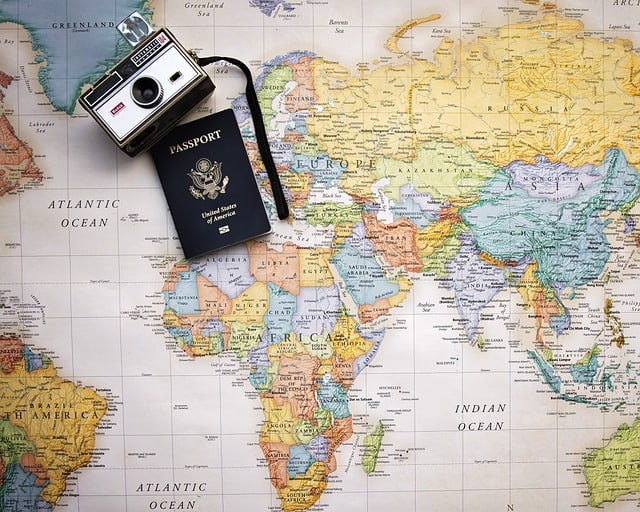
When you fall in love with someone who lives on the other side of the world, the road ahead can feel like a fog. You know where you want to end up: together, in one home, with a life you built on purpose. What you can't see is every step between that first sweet message and the day he walks through your front door with a green card.
I've walked a lot of this road myself. I've been scammed, so I know how real a fake love can feel from the inside. And today I'm happily with a much younger man from Morocco, a relationship plenty of people doubted. Both of those experiences taught me the same lesson: you don't need fear, and you don't need blind trust. You need a clear map and the calm to check each step as you go.
This is that map. I'm going to take you stage by stage, from talking online to the first two years after he arrives. For each stage you'll see what usually happens, how long it can take, what to check, the green flags, the red flags, and what to protect. Most men in these relationships are genuine. This timeline is built to help you see that clearly when it's true, and to catch the rare case when it isn't.
Please read this first
This article is general information, not legal or immigration advice. It's written for women everywhere who love a man from another country, whether you live in the US, the UK, Europe, Canada, Australia, or anywhere else he may see more opportunity. The stages, green flags, and red flags apply to all of you. The visa steps follow the US process as an example, because every country has its own. Immigration rules, forms, and fees change, and every case is different, so check your government's official immigration website (for the US, the USCIS and State Department pages linked below) and talk with a licensed immigration attorney about your own situation.
The whole journey at a glance
Before we get into the details, here's the big picture. Save this table. You'll come back to it.
| Stage | Main goal | Key protection |
|---|---|---|
| 1. Talking online | Confirm he is who he says he is | No money, no private images, steady pace |
| 2. The first visit | See if the real person matches the online one | Your own room, your own money, your own return ticket |
| 3. Getting serious | Know his family, faith, finances, and plans | Honest talks before any commitment |
| 4. Engagement and the big decision | Choose K-1 fiancé visa or marriage plus spousal visa | Understand the I-864 before you sign |
| 5. The wedding or nikah | A marriage that is legally valid and registered | Official certificates, not only a religious ceremony |
| 6. The visa process and waiting | Show a genuine relationship and stay patient | Organized records, copies of everything |
| 7. Arrival and the first two years | Build a real shared life and remove conditions | Separate savings, clear finances, an attorney on call if needed |
A quick word about timing
Everybody wants to know how long this takes. The honest answer: it depends, and it changes. Government processing times move up and down depending on the form, the office, and the year. Consulates abroad have their own waits for interviews. Instead of trusting a number from a forum or a friend's cousin, check the official USCIS processing times page for the form you're filing, and the embassy or consulate website for your partner's country. From first message to a green card in hand, most couples should plan in years, not months.
Stage 1: Talking online (the first weeks and months)
What typically happens
You message every day. Then you're on video calls, sharing your mornings and his evenings across time zones. You learn about his work, his family, his town. It feels exciting and a little unreal, and that's normal.
How long it can take
There's no correct number of weeks. What matters is that the relationship grows at a human pace. Real love can move fast, but it doesn't need to rush you.
What to check
- That he will video call, on camera, live, more than once. If he keeps avoiding it, read what it means when he won't video call.
- That his photos, name, job, and location line up. A reverse image search takes two minutes.
- That his story stays consistent over weeks, not just days.
- That friends or family exist in his life, even if you only see them in the background of a call.
If you want a structured way to do this, here's how to vet your online love before you meet, and The Scam Probability Calculator walks you through 95 questions calmly, one at a time.
Green flags
He video calls without drama. He asks about your life and remembers the answers. He's curious about your family and friends. He's happy to go slow and never asks you for money.
Red flags
Talk of marriage and forever within days. A sudden emergency that needs money. Pressure to move to a different app or keep things secret. Requests for private or intimate photos. Any one of these is a reason to slow down and look closer, not a verdict on its own.
What to protect: your money (send none), your private images (share none), and your personal details like your home address, bank, and workplace until trust is earned in person.
Stage 2: The first visit
What typically happens
One of you travels to meet the other. More often in my world, it's the woman who travels, because it's usually easier for a US passport holder to get a tourist visa than it is for him. This trip is where a screen turns into a person, with a voice, a laugh, habits, and a family.
How long it can take
Many couples plan the first visit after a few months of steady video calls, but there's no rule. Give yourself enough days to see ordinary life, not just a romantic highlight reel. And if you're thinking about a K-1 visa later, know that USCIS generally requires fiancé couples to have met in person within the two years before filing, with limited exceptions. That in-person meeting matters.
What to check
- Does he look and sound like the man on your calls?
- Does he introduce you to anyone, or keep you hidden?
- How does he treat waiters, drivers, his mother, and you when you're tired or cranky?
I've traveled to nearly 100 countries and lived in eight of them, including Morocco, Egypt, and Nigeria. The same safety basics work everywhere. Read my guide to meeting your online love for the first time and 5 places to never go on a first date abroad before you book anything. If he's offering to pay for your trip, read how to stay safe when he's paying for your trip too.
April's first visit rule
Book your own hotel, carry your own money, hold your own passport, and have a return ticket you can use any day. Share your location with a friend at home. A good man will respect every one of these. He might even suggest them.
Green flags: he matches his calls, he's proud to introduce you, he respects your boundaries around your room and your plans. Red flags: he insists you stay with him, wants to hold your passport "for safety," or the story about his job or home suddenly changes.
What to protect: your passport, your cards, your emergency cash, and your ability to leave whenever you choose.
Stage 3: Getting serious
What typically happens
More visits. Meeting his parents and siblings. Maybe he meets your family on a video call. And the big talks begin: faith, culture, children, money, and where you'd actually live.
What to check
- Family: Do they know about you? Do they know your age, your faith, your plans? A family that has welcomed you openly is a lovely sign.
- Faith and culture: If he's Muslim and you're not, or the other way around, talk about what that means for daily life, holidays, food, and any children. Different faiths can work beautifully when both people are honest.
- Finances: What does he earn, what do you earn, and who is expected to pay for what? Talk about it plainly now, not after the wedding.
- Where you'd live: Would you ever live in his country? If the answer is "only America, always," ask yourself why.
That last question is a powerful one. A man who loves you is usually open to the idea of a life in either place, even if the US makes more sense for your family. The Visa Audit helps you look at this honestly, and does he love me or want a visa? goes deeper into the signs on both sides.
Green flags: he includes you in family life, talks openly about money, and treats your questions as fair. Red flags: his family doesn't know you exist, he gets angry when you ask about finances, or every conversation about the future is really a conversation about the visa.
What to protect: keep your savings in your name only, don't co-sign loans or buy property together yet, and keep gifts modest. Here's why money gifts can quietly change a relationship.
Stage 4: Engagement and the big decision
Once you're engaged, you'll face the biggest practical choice of the whole journey. Do you bring him to the US as your fiancé and marry here? Or do you marry in his country and then sponsor him as your spouse? Here's how the two main paths generally work, based on USCIS and State Department guidance.
Path A: The K-1 fiancé visa
- You file Form I-129F, Petition for Alien Fiancé(e), with USCIS.
- If it's approved, the case moves to the State Department and the US embassy or consulate in his country.
- He completes a medical exam with an approved doctor and attends a consular interview.
- If the visa is issued, he enters the US, and you must marry within 90 days of his arrival. If you don't marry in that window, he's expected to leave.
- After the wedding, he applies to adjust status to permanent resident using Form I-485, and you submit Form I-864, the Affidavit of Support.
Path B: Marry first, then the spousal visa (CR-1 or IR-1)
- You marry legally, often in his country.
- You file Form I-130, Petition for Alien Relative, with USCIS.
- After approval, the case goes to the National Visa Center, where you submit fees, civil documents, and the I-864 Affidavit of Support.
- He has a medical exam and a consular interview.
- If approved, he enters the US as a permanent resident. The physical green card is mailed after he arrives (there's a separate USCIS Immigrant Fee to pay for it).
The difference between CR-1 and IR-1 is simply how long you've been married. If your marriage is less than two years old when he becomes a permanent resident, he gets a CR-1 and a conditional green card valid for two years. If you've been married two years or more by then, he gets an IR-1 and a standard 10-year green card.
| K-1 fiancé visa | CR-1 / IR-1 spousal visa | |
|---|---|---|
| Where you marry | In the US, within 90 days of his arrival | Before filing, usually in his country |
| Main petition | I-129F | I-130 |
| Status on arrival | Temporary fiancé status, then adjustment of status (I-485) | Permanent resident on admission |
| Affidavit of Support (I-864) | Filed with adjustment of status after the wedding | Filed during the National Visa Center stage |
| Working | Needs work authorization while adjustment is pending | Can work as a permanent resident |
| The big trade-off | You live together before the wedding, but there are more steps after arrival | More waiting apart, but a simpler start once he lands |
I've written more about this choice in the pros and cons of the fiancé visa, and if your partner is Moroccan, start with my guide to US visas for Moroccan partners.
Before you sign the I-864
The Affidavit of Support is a legally enforceable contract with the US government. You're promising to keep your spouse's income at or above a set level (generally 125% of the federal poverty guidelines, listed on Form I-864P). According to the form's instructions, the obligation generally continues until he becomes a US citizen, is credited with 40 quarters of work, leaves the US and gives up permanent residence, or one of you dies. Divorce does not end it. Read the form instructions yourself and ask an attorney anything you're unsure about.
Fees: I'm not listing dollar amounts here because they change. Check the current USCIS fee schedule and the State Department's visa fee pages on the day you file.
Green flags: he wants to understand the process with you, asks what the I-864 means for you, and is fine with whichever path is safer for you. Red flags: he pushes one path hard without a reason, rushes you to file, or brushes off your questions about money and obligations.
Stage 5: The wedding or nikah
This is the joyful part, and it deserves a little careful planning. For immigration purposes, what counts is a marriage that is legally valid where it took place and properly registered with the civil authorities. A religious ceremony is beautiful and meaningful, but on its own it may not be legally recognized.
This catches a lot of couples off guard with a nikah. I explain the difference in nikah: what it really means and the legal reality couples need to know. The short version: make sure you end up with an official, registered marriage certificate, not only a religious document.
Marrying in Morocco
In Morocco, a marriage between a Moroccan citizen and a foreigner has its own administrative requirements and paperwork, and it can take time. Please don't rely on hearsay. Start with the US Embassy in Morocco's marriage page, then confirm the current requirements with Moroccan authorities or a local lawyer. The same goes for any country: check official sources first.
Green flags: he wants the marriage done properly and legally, and his family is part of the celebration. Red flags: he wants only a quick religious ceremony and resists registering it, or he wants to skip his family entirely.
What to protect: get several certified copies of the marriage certificate, plus official translations if needed, and store them in more than one safe place.
Stage 6: The visa process and waiting
What typically happens
You file. You wait. You check your case status more often than you'll admit. Then you wait some more. This stage often feels the longest, because so much is out of your hands.
How long it can take
It varies a lot by form, office, and consulate, and it changes over time. Check the USCIS processing times page for your petition and your partner's embassy site for interview waits. Plan for this to take many months, and possibly longer.
What to check and keep
Immigration officers want to see a genuine relationship. The good news is that if your relationship is real, the evidence builds itself. You just have to save it:
- Photos together over time, in different places, with family and friends
- Ongoing communication: call logs, message history, emails
- Proof of visits: boarding passes, passport stamps, hotel receipts
- Joint plans: wedding planning, apartment searches, shared goals
Watch for this pattern
Affection that rises and falls with the paperwork. Sweet and attentive when a form needs your signature, then distant and cold when the case is simply waiting. Everyone gets stressed during this stage, so one bad week means nothing. A steady pattern over months deserves a closer look.
Green flags: he stays patient, keeps calling even when there's no news, and shares the stress instead of dumping it on you. Red flags: blaming you for delays, asking for money to "speed things up," or pushing you to leave out or change information on forms. Honesty on every form protects both of you.
If you're doubting him during the wait, The Love Audit can help you sort feelings from facts.
Stage 7: Arrival and the first two years
Adjusting to a new life
He's here. It's wonderful, and it's also a lot. He's far from his family, maybe learning a new language, figuring out a new culture, and possibly depending on you for almost everything at first. That can feel strange for both of you. Give it grace. Adjustment takes time, and some homesickness is a sign of a real person with real roots, not a warning sign.
Work
If he came on a spousal immigrant visa, he arrives as a permanent resident and can work. If he came on a K-1, he generally needs work authorization (Form I-765) while his adjustment of status is pending. Either way, a man who wants to contribute and find his footing is one of the loveliest green flags you'll see.
The conditional green card and removing conditions
If your marriage was less than two years old when he became a permanent resident, his green card is conditional and valid for two years. To keep his status, you normally file Form I-751, Petition to Remove Conditions on Residence, together, during the 90 days before the card expires. You'll again show evidence that your marriage is real: a shared home, shared bills, joint accounts or insurance, photos, and your life together. Mark that window on your calendar the day he arrives.
The reality of the I-864
Remember that Affidavit of Support? It's now active. It doesn't end with divorce. I've written a full breakdown in love and liability: what every woman should know before sponsoring a foreign spouse. Please read it, ideally before you sign.
Protect your finances, with love
Keep a savings account in your own name. Add him to joint accounts for shared household bills, which also builds evidence for the I-751, but don't hand over access to everything. Keep property you owned before the marriage clearly documented. Talk with a financial or legal professional about your specific situation. None of this is distrust. It's the same care you'd take with any major life change.
If things go wrong
Most marriages that make it this far are genuine. But if something changes, like he goes cold once the green card arrives, disappears, or becomes controlling, please don't handle it alone. Immigration consequences in these situations depend on the details, and there are separate rules for things like divorce or abuse. A licensed immigration attorney is the right person to call. You can also read are you being used for a green card? to sort through what you're seeing.
The State Department also publishes information on the rights and protections of foreign fiancés and spouses. It's worth reading from both sides, because a healthy marriage protects both people.
Documents and records to keep
Start a folder on day one, digital and paper. Future you will be so grateful.
Copies of both passports and every visa page
Birth certificates, and divorce or death certificates from any prior marriages
Certified copies of your marriage certificate, plus official translations
Photos together, dated, over the whole relationship
Call logs, message history, and emails (exported and backed up)
Boarding passes, hotel receipts, and passport stamps from every visit
A copy of every form you file, every receipt notice, and every letter from USCIS or the embassy
Your tax returns and proof of income for the I-864
After arrival: lease or deed, joint bills, joint bank or insurance statements
A record of any money you sent or spent on him, with dates
The date his conditional green card expires, with the I-751 window marked
FAQ
How long does it take to marry a foreign partner and bring him to the US?
From first message to green card, plan in years. The government part alone often takes many months, and times change by form, office, and country. Check the USCIS processing times page and your partner's US embassy site for current waits.
Is a K-1 fiancé visa or a spousal visa better?
Neither is better for everyone. The K-1 lets you marry in the US but adds steps after arrival, like adjustment of status. The spousal visa means he arrives as a permanent resident, but you usually wait apart longer. An immigration attorney can help you weigh them for your case.
Does a religious marriage count for immigration?
Generally, the marriage needs to be legally valid where it took place. A religious ceremony alone, like a nikah that was never registered, may not be legally recognized. Make sure you have an official, registered marriage certificate.
Am I responsible for him financially if we divorce?
Under the I-864 Affidavit of Support, divorce does not end your obligation. According to the form instructions, it generally ends when he becomes a citizen, is credited with 40 quarters of work, leaves the US and gives up permanent residence, or dies. Talk to an attorney before signing.
What is a conditional green card?
If your marriage is less than two years old when he becomes a permanent resident, he receives a two-year conditional green card. You then file Form I-751 together, during the 90 days before it expires, to remove the conditions.
How do I know if he really loves me or just wants a visa?
Look at the pattern over time. Is he consistent whether or not paperwork is moving? Would he consider living in his country with you? Does his family know you? The Visa Audit walks you through these questions gently.
Do I need an immigration attorney?
You aren't required to have one, and many couples file on their own. But for anything unusual, like a prior marriage, a past visa denial, or a criminal record on either side, or if you just want peace of mind, an attorney is worth it.
You don't have to walk this alone
This journey is long, and some days it will test you. But so many couples make it, and the ones who do usually have one thing in common: they kept their eyes open and their hearts open at the same time. You can do both. If you'd like someone in your corner while you figure out your next step, book a private coaching call with me. I'd love to help.

From April's guides
Thinking about sponsoring him?
My Green Card Sponsorship Checklist walks you through exactly what you're signing up for, the questions to ask first, and how to go into the process with your eyes open.

Still figuring out what's really going on?
Take the Catfish Checklist or the Visa Audit to get a clearer picture.
Your love feels real and you're ready to travel?
Find trusted flights, stays, and travel insurance on my Resources page, or get my Amazon bestseller.
Think you've been scammed?
Read what to do next, or browse all my Guides & eBooks.


0 Comments