
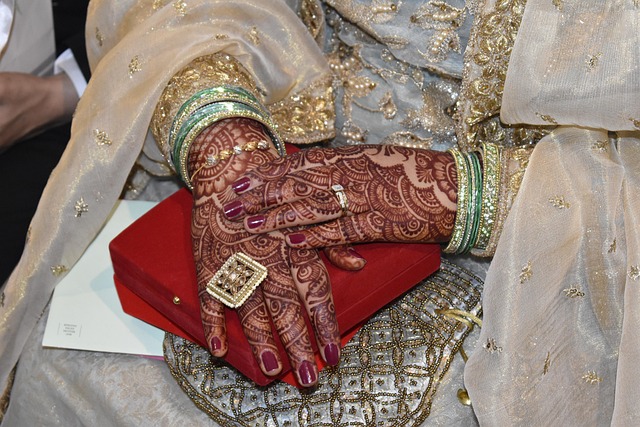
If you're in a relationship with a Muslim partner, or you're active in communities of women dating internationally, you've probably heard the word nikah come up. It's often misunderstood, sometimes dismissed as a shortcut, sometimes treated as a full legal marriage when it isn't one. Here's what it actually is, and what every couple considering one genuinely needs to know.
What a Nikah Actually Is
A nikah is the Islamic marriage contract, a religious and spiritual commitment made in front of witnesses, typically including an officiant, agreed terms between the couple, and in many traditions, a mahr, a gift or financial commitment from the husband to the wife. For most Muslims, it is not a casual or symbolic gesture. It's a covenant made before Allah, carrying real religious weight and real responsibilities on both sides.
Two Realities That Both Exist
It's worth being honest about something that comes up often in conversations with women in this space: some men do use a nikah as a way to justify a physical relationship before a legal marriage takes place, without necessarily intending the same long-term commitment a legal marriage implies. This does happen, and it's a fair thing to be aware of.
But that's genuinely not the norm. Many, likely most, people who choose a nikah take it exactly as seriously as its religious meaning suggests: a sacred promise, not a loophole. The existence of some people who misuse a religious practice doesn't make the practice itself insincere, any more than a handful of sham civil marriages make civil marriage meaningless. The distinction isn't really about the nikah itself, it's about the sincerity of the specific person you're marrying, which is true of any kind of marriage, anywhere.
Why Some Couples Choose a Nikah First, or Only
There are genuinely good reasons a couple might do the religious ceremony before, or sometimes instead of, a civil marriage, at least temporarily:
- The couple wants their relationship to be religiously and morally sound before living together or being physically intimate, while the civil paperwork, which can take months, is still being processed
- One partner has a practical reason to delay a legal marriage, insurance coverage tied to a previous marital status, an immigration timeline, or a career situation are common ones
- The couple is planning a long-distance engagement and wants to formalize their commitment religiously before one partner relocates
- Family or community expectations call for a religious ceremony to happen before a civil one is logistically possible
None of these reasons are automatically a red flag. What matters is whether both partners are on the same page about the plan and the timeline for making it legally official too.
The Legal Gap Most Couples Don't Expect
Here's the part that catches a lot of couples off guard, especially when one partner isn't Muslim or the couple is navigating two different countries' legal systems: a nikah, on its own, is a religious contract, not automatically a legally recognized civil marriage.
What that means in practice varies a lot by country, and even among Muslim-majority countries themselves, this isn't a single, universal system. In some places, a nikah performed by a registered officiant is automatically recorded as a legal marriage. In many others, including plenty of Muslim-majority countries, it isn't, and the couple needs a separate civil marriage process for it to be legally recognized at all. This matters for very practical things: immigration and visa sponsorship, inheritance rights, spousal legal protections, and in some countries, whether the relationship is even legally permitted to exist under local law.
The Adoul: Morocco's Marriage Notary
In Morocco specifically, marriages are formalized through an adoul, an Islamic notary authorized to draft and register marriage contracts. The adoul's role isn't just ceremonial, once a Family Court judge authorizes the marriage, the adoul drafts the official contract in Arabic, both parties and two Muslim witnesses sign it, and the adoul registers it with the relevant civil authorities. That registration is what actually makes a marriage in Morocco legally recognized, not the religious ceremony alone.
Example: A Mixed Couple in Morocco
Say you're a non-Muslim, non-Moroccan woman with a Moroccan Muslim partner. Under Morocco's Family Code, the specific requirements depend on both your religion and your partner's:
- If your partner is a Moroccan Muslim man and you are Christian or Jewish, you are not required to convert to Islam to marry him legally in Morocco
- If your partner is a Moroccan Muslim woman and you are a non-Muslim man, you would be required to formally convert to Islam before an adoul and obtain a certified conversion document before the marriage can proceed, this rule applies regardless of gender roles being reversed from the example above
- If both partners are already Muslim, the process is more straightforward and doesn't involve the conversion requirement at all
- A full mixed-marriage file typically requires a certificate of legal capacity to marry from your home country's embassy, your birth certificate, proof of religious denomination, and a medical certificate obtained inside Morocco, all translated into Arabic and officially legalized
- A Family Court judge must authorize the marriage before the adoul can draft the contract, and mixed marriages typically involve an additional police background check
Steps Many Couples Take
Gathering everything required for a full Moroccan civil marriage can take significant time, sometimes more than most women can take off work for. Because of this, some couples choose a two-step approach:
- Complete a legal civil marriage somewhere faster and simpler, an online marriage through a US state like Utah is one option some couples use, since it can often be completed remotely
- Have that marriage certificate translated by a court-accredited translator and legalized with an apostille
- File the certificate with the Moroccan consulate in the couple's country of residence, generally within three months of the marriage, so it can be recognized in Morocco
- Once recognized, the marriage gets noted in the margin of the relevant Moroccan civil records, making it legally valid there too
This route exists specifically because Moroccan law allows Moroccans abroad to marry according to the rules of their country of residence, then register that marriage back home. It's genuinely worth discussing with a family law attorney familiar with both countries before you start, since exact requirements and processing times shift.
An online marriage may or may not end up being recognized in Morocco. Requirements and processing can change, so confirm directly with Moroccan authorities, or your local Moroccan consulate, before relying on this route. The U.S. Embassy in Morocco also maintains current guidance on marriage requirements at ma.usembassy.gov/services/marriage-in-morocco.
Can a Foreign Marriage Certificate Be Used to Book a Hotel Room in Morocco?
This comes up more than you'd think, and the honest answer depends on who's asking. Since May 2024, Morocco's Minister of Justice publicly confirmed that hotels are not legally required to ask for a marriage certificate at all, and police have communicated this directly to hotels. In practice, for a couple where neither partner is Moroccan, this has already been a non-issue for years, most hotels and riads catering to tourists simply don't ask.
Where it still matters is when one partner is Moroccan, or holds Moroccan nationality. In that situation, many hotels and rental hosts still request proof of marriage, largely to protect themselves from liability under local law. A legally registered foreign marriage certificate, translated and ideally already filed with the Moroccan consulate as described above, generally does work as that proof, since at that point it's a recognized marriage, not just a foreign document. If you're in this situation, it's worth calling ahead to confirm a specific hotel's policy, since practices still vary property to property.
None of this is about doubting the sincerity of a nikah, or of the person offering you one. It's about making sure your relationship is protected the same way in the eyes of the law as it already is in your heart. A partner who takes the religious commitment seriously will generally also want the legal side handled properly, that's not distrust, it's just good partnership.
Have you navigated a nikah alongside a civil marriage process, in your own country or across borders? Share what you learned in the comments, it might help another woman avoid a legal blind spot she doesn't know she has.

From April's guides
Wondering if it's the real thing?
My Relationship Green Flags & Red Flags Guide helps you see what healthy love looks like, what deserves a closer look, and how to tell the difference calmly.

Still figuring out what's really going on?
Take the Catfish Checklist or the Visa Audit to get a clearer picture.
Your love feels real and you're ready to travel?
Find trusted flights, stays, and travel insurance on my Resources page, or get my Amazon bestseller.
Think you've been scammed?
Read what to do next, or browse all my Guides & eBooks.


0 Comments