

I get messages every week from women who say some version of the same thing: "I know it sounds crazy, but this felt different." I understand that feeling better than most people who write about this topic, because I was scammed myself years ago. It's part of why I do this work now, and part of why I never want this article to make you afraid of every man who compliments you online. Most people on dating apps, including most men from other countries, are exactly who they say they are and want exactly what they say they want. This isn't a warning that every match is a con artist. It's a map of the pattern the con artists use, so you can recognize it fast if it shows up and relax if it doesn't.
Scammers follow a script because scripts work. Once you've seen the shape of it, you stop being able to unsee it, and that alone puts you miles ahead of where you were before you read this.
Step One: The Fast, Intense Connection
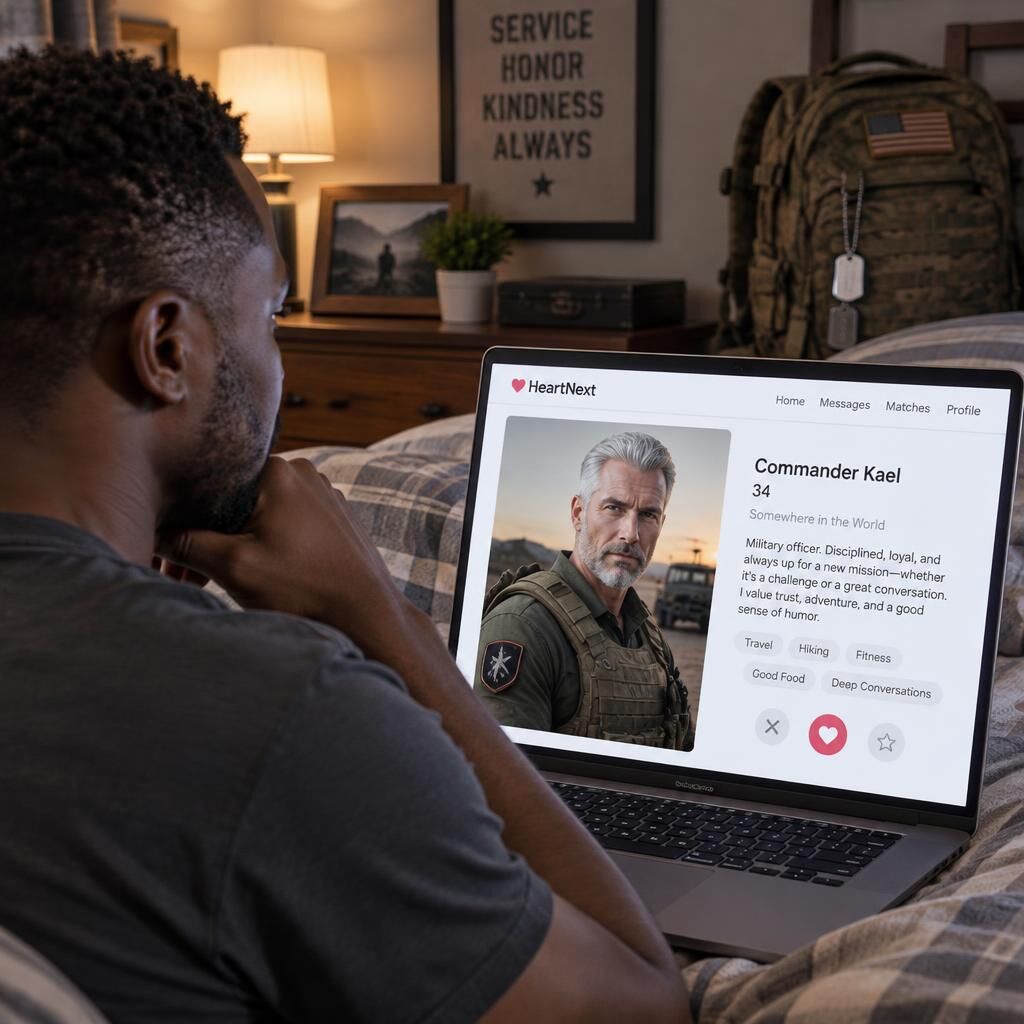
A real connection usually builds. A scam connection gets manufactured on purpose, and it moves fast because speed is the whole strategy. Within days, sometimes hours, you're hearing things like "I've never felt this way about anyone" or "I think you're my soulmate." It feels incredible, especially if you've been lonely or if past relationships left you wanting someone who actually shows interest.
Here's the thing to hold onto: genuine affection can also move fast. Plenty of real couples fall hard early on, including me. Age gap and international relationships often do build intensity quickly, and that by itself proves nothing either way. What matters is whether the intensity is matched by consistency over time, or whether it's the only tool being used to keep you hooked while everything else stays vague.
Step Two: Pulling You Off the App and Away from Your People
Once the emotional hook is set, the next move is almost always to get you talking somewhere private. "This app keeps logging me out" or "let's talk on WhatsApp, it's easier" sounds harmless, and plenty of legitimate people prefer texting to app messaging too. The red flag isn't the platform switch itself. It's what tends to follow it: less transparency, no more profile for you to reference, and a slow nudge toward relying on him and only him for information about him.
And just a note: my partner and I immediately chatted on WhatsApp, so the good guys and the bad guys use it. But just be cautious.
Watch for the same pattern with your friends and family. A scammer often works to become your main source of emotional support, sometimes subtly suggesting the people in your life "don't understand" what you two have, or that they're jealous, or old-fashioned. A good partner, whatever his background, wants to meet the people who matter to you. He doesn't need you isolated to feel secure in the relationship.
Step Three: Building the Future Before You've Met
This is where the story gets vivid. Wedding talk, house hunting, naming future children, detailed plans for the life you'll build together, all before you've spent five minutes in the same room. It's designed to make the relationship feel too far along to walk away from, and to make any doubt you raise feel like you're the one ruining something beautiful.
I want to be honest with you here. Talking about the future early isn't automatically a red flag. My own relationship had big, real conversations early on too. The difference is whether those conversations come with a plan to actually close the distance, in a reasonable timeframe, with real logistics, or whether the future keeps getting talked about while every concrete step toward meeting keeps sliding away.
Step Four: The Excuses That Keep the Curtain Closed
Ask for a video call and pay close attention to what happens next. A camera that's "always broken," a job that "doesn't allow it," a connection that's "too unstable" every single time, these excuses can be real once or twice. When they're permanent, that's your answer. Someone who genuinely wants a future with you wants you to see his face and hear his voice, because that's how trust actually gets built between two real people.
The same goes for meeting in person. Real logistics, visas, work schedules, and money can genuinely delay a meeting in a long-distance relationship, and I know that firsthand from my own life. What's different with a scammer is that the delay never actually resolves. There's always a new reason, and the goalpost for "finally meeting" keeps moving no matter how patient you are.
Step Five: The Money Ask
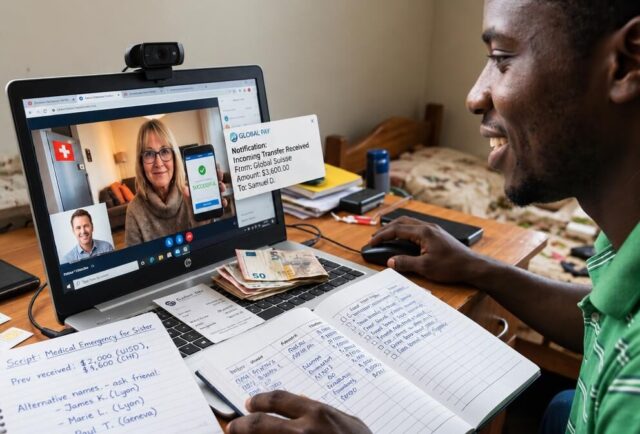
Eventually, it comes. Sometimes it's dressed up as a crisis: a medical emergency, a stuck shipment, a frozen account, a customs fee standing between him and the flight to finally see you. Sometimes it's smaller and more gradual, a bit of phone credit here, a small "loan" there, testing to see what you'll give before asking for more. This is the part of the pattern with no gray area. A stranger you haven't met in person asking you for money, in any amount, for any reason, is the single clearest signal in this entire playbook.
Sometimes there's a test first, a small amount sent your way and then an urgent request to send some of it back or forward it somewhere else. That's not generosity. It's a dry run to see if you'll move money on his behalf, which is exactly the setup used in bigger scams down the line.
Why This Isn't a Reason to Be Suspicious of Everyone
I've lived in seven countries and traveled to nearly a hundred, and I'm married to a man from Morocco who is younger than me, met online, and checks nearly every box people tell you to worry about. He is also one of the most loving, steady, generous people I've ever known. If I'd let a checklist of red flags scare me off before I actually looked at the real man in front of me, I would have missed out on the best relationship of my life.
The goal of knowing this playbook isn't to assume the worst about someone because he's foreign, younger, or someone you met on an app. It's to recognize the pattern quickly on the rare occasion it actually shows up, so you can protect yourself without living in fear the rest of the time. Most men are not running a script. They're just men, doing their honest best to build something real with you.
What to Do With This
-
Notice the pattern as a whole, not any single moment in isolation. One fast compliment or one delayed video call means very little on its own.
-
Keep your friends and family in the loop as the relationship develops, and pay attention if he seems to want them out of the picture.
-
Never send money, gift cards, or crypto to someone you haven't met in person, no matter how good the reason sounds in the moment.
-
If you want a clearer read on where things actually stand, run the details through my free scam probability calculator.
If you're in the middle of this right now and you're not sure which way it's leaning, that uncertainty is exactly what my coaching calls are for. You don't have to sort it out alone, and you don't have to wait until it's gone too far to ask someone who's seen this pattern before.

From April's guides
Ready to actually check him out?
Recognizing the playbook is step one. My How to Verify Him Guide walks you through the exact steps to confirm someone is who he says he is, calmly and without accusing anyone of anything.

Still figuring out what's really going on?
Take the Catfish Checklist or the Visa Audit to get a clearer picture.
Your love feels real and you're ready to travel?
Find trusted flights, stays, and travel insurance on my Resources page, or get my Amazon bestseller.
Think you've been scammed?
Read what to do next, or browse all my Guides & eBooks.
0 Comments